
Showing posts with label Iran. Show all posts

Sunday, June 13, 2010

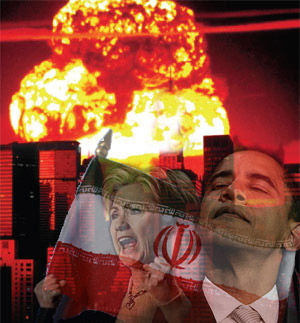
UN "Green Light" for a Pre-emptive US-Israel Attack on Iran? Security Council Resolution Transforms Iran into a "Sitting Duck"

from : http://www.sott.net

Michel Chossudovsky
Global Research
Fri, 11 Jun 2010 19:59 EDT
© Unknown
"A sitting duck is a defenceless victim, an easy target, vulnerable to attack"
The UN Security Council voted on June 9 the imposition of a fourth round of sweeping sanctions against The Islamic Republic of Iran, which include an expanded arms embargo as well "tougher financial controls".

In a bitter irony, this resolution was passed within days of the United Nations Security Council's outright refusal to adopt a motion condemning Israel for its attack on the Gaza Freedom Flotilla in international waters.

It also followed the holding of the Nuclear Non-Proliferation Treaty (NPT) conference in Washington under UN auspices, which called for the establishment, in its final resolution, of a nuclear free Middle East as well as the dismantling of Israel's nuclear weapons arsenal. Israel is considered to be the World's sixth nuclear power, with, according to Jane Defense, between 100 and 300 nuclear warheads. ( Analysts: Israel viewed as world's 6th nuclear power, Israel News, Ynetnews, April 10, 2010). Iran in contrast has no known nuclear weapons capabilities.

UNSC Resolution 1929 is based on a fundamental falsehood. It upholds the notion that Iran is an upcoming nuclear power and a threat to global security. It also provides a green light to the US-NATO-Israel military alliance to threaten Iran with a pre-emptive punitive nuclear attack, using the UN Security Council as rubber stamp.

The Security Council exercises double standards in the application of sanctions: Whereas Iran is the target of punitive threats, Israel's extensive nuclear arsenal, is either ignored or tacitly accepted by "the international community". For Washington, Israel's nukes are an instrument of peace in the Middle East.

Moreover, whereas all fingers are pointed at Iran which does not possess nuclear weapons, five so-called "non-nuclear" European states including Belgium, Holland, Germany, Italy and Turkey not only possess tactical nuclear weapons under national command, these warheads are deployed and targeted at Iran.

Resolution 1929 (June 9, 2010):
"7. Decides that Iran shall not acquire an interest in any commercial activity in another State involving uranium mining, production or use of nuclear materials and technology as listed in INFCIRC/254/Rev.9/Part 1, in particular uranium-enrichment and reprocessing activities, all heavy-water activities or technology-related to ballistic missiles capable of delivering nuclear weapons, and further decides that all States shall prohibit such investment in territories under their jurisdiction by Iran, its nationals, and entities incorporated in Iran or subject to its jurisdiction, or by persons or entities acting on their behalf or at their direction, or by entities owned or controlled by them;

"8. Decides that all States shall prevent the direct or indirect supply, sale or transfer to Iran, from or through their territories or by their nationals or individuals subject to their jurisdiction, or using their flag vessels or aircraft, and whether or not originating in their territories, of any battle tanks, armoured combat vehicles, large calibre artillery systems, combat aircraft, attack helicopters, warships, missiles or missile systems .... , decides further that all States shall prevent the provision to Iran by their nationals or from or through their territories of technical training, financial resources or services, advice, other services or assistance related to the supply, sale, transfer, provision, manufacture, maintenance or use of such arms and related materiel, and, in this context, calls upon all States to exercise vigilance and restraint over the supply, sale, transfer, provision, manufacture and use of all other arms and related materiel;" (Security Council Imposes Additional Sanctions on Iran, Voting 12 in Favour to 2 Against, with 1 Abstention, Includes complete text of UNSC Resolution 1929, UN News, June 9, 2010, emphasis added, )
The Arms Embargo. Implications for Russia and China

Both the Russian Federation and the People's Republic of China have caved in to US pressures and voted in favor of a resolution, which is not only detrimental to Iran's security, but which seriously weakens and undermines their strategic role as potential competing World powers on the Eurasian geopolitical chessboard.

The resolution strikes at the very heart of the structure of military alliances. It prevents Russia and China to sell both strategic and conventional weapons and military technology to their de facto ally: Iran. In fact, that was one of major objectives of Resolution 1929, which Washington is intent upon enforcing.

At the same time, by barring Iran from purchasing conventional military equipment, the resolution prevents Iran from defending itself from a US-NATO-Israel attack.

The resolution, were it to be fully enforced, would not only invalidate ongoing bilateral military cooperation agreements with Iran, it would create a wedge in the Shanghai Cooperation Organization (SCO).

It would also significantly weaken trade and investment relations between Iran and its Russian and Chinese partners. The financial and banking provisions in the resolution also point to Washington's resolve to not only isolate Iran but also to destabilize its financial system.

Washington is intent upon enforcing this resolution. Secretary of State Hillary Clinton has appointed Robert Einhorn, Special Advisor for Nonproliferation and Arms Control, as U.S. coordinator for the implementation of the sanctions regime directed against both Iran and North Korea:.
"U.S. President Barack Obama hailed the resolution, saying it will put in place the toughest sanctions ever faced by the Iranian government and send an "unmistakable message" to Tehran about the international community's commitment to stopping the spread of nuclear weapons."(Clinton appoints coordinator for sanctions against Iran, DPRK, Xinhua, June 10, 2010
"We expect every country to aggressively implement Resolution 1929" said State Department spokesman P.J. Crowley. Were China and Russia to decide not to abide by the resolution's provisions, particularly those relating to weapons sales to Iran (art. 8), Washington would use this as an opportunity to engage in an increasingly confrontational diplomacy in relation to Beijing and Moscow.

The resolution is also intended to establish a US led hegemony in the production and export of advanced weapons systems. It is is heavy blow, almost a "death sentence", for China and Russia's lucrative international weapons trade, which competes with the US, UK, France, Germany and Israel. In the post-Soviet era, the arms trade has become a central component of Russia's fragile economy. The potential repercussions on Russia's balance of payments are far-reaching.

Disabling Iran's Missile Defence System

UN Security Council resolutions are an integral part of US foreign policy. They are on the drawing board of Washington's think tanks, including the Council on Foreign Relations (CFR), the American Enterprise Institute (AEI) and the Heritage Foundation. In this regard, it is worth noting that the substance of article 8 of UNSC Resolution 1929 (June 9, 2010 was contained in a January 2010 report of the Heritage Foundation, which calls for "blocking arms sales to Iran" including Russia's S-300 missiles:
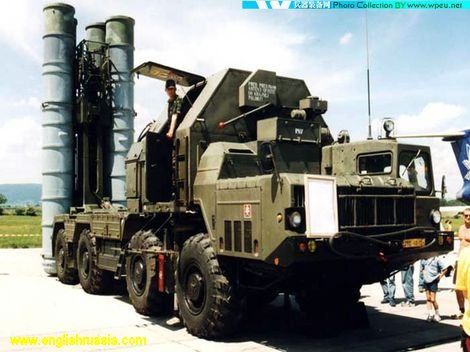
"Washington and its allies should make every effort to deprive Iran of foreign arms transfers, particularly the impending sale of Russian S-300 surface to air missiles, which could provoke Israel to strike sooner rather than later. Stronger multinational efforts also need to be made to prevent Iran from trans­ferring arms to Hezbollah and Palestinian terror­ist groups, which pose a threat not only to Israel, but to stability in Lebanon, Egypt, and Jordan. On November 3, Israeli naval forces intercepted the Francop, an Antigua-flagged cargo ship that was transporting about 500 tons of weapons from Iran to Hezbollah, via Syria.[22] The U.S. should press other allies to join in giving greater assistance to Israeli efforts to intercept Iranian arms flows, particularly to Hezbollah and Hamas." (James Phillips, An Israeli Preventive Attack on Iran's Nuclear Sites: Implications for the U.S, The Heritage Foundation, Washington, DC, January 2010)
© Unknown
Russia's S-300 Surface to Air Missile
Did Moscow assess the implications of the proposed arms embargo?

Immediately following the adoption of the UNSC resolution on June 9th, several Russian press reports indicated that the sale of Russian S-300 missiles to Iran would be frozen, despite assurances by foreign Minister Sergei Lavrov that the UNSC resolution would not affect the air-defence deal..(Russia says in talks with Iran on new nuclear plants, Haaretz, June 10, 2010) These contradictory statements suggest that there are significant divisions within the Russian leadership, without which Russia would have duly exercised its veto power in the UN Security Council.

Without Russian military aid, Iran is a "sitting duck". Its air defence system depends on continued Russian military cooperation. Moreover, without Iran, Russia would be constrained to selling military equipment to countries in the US-NATO orbit. (See Russia to offset loss of Iran arms sales with Iraqi, Afghan deals, Russia, RIA Novosti, June 11, 2010)

Pre-emptive nuclear attack on Iran

The World is at dangerous crossroads. The real threat to global security emanates from the US-NATO-Israel alliance. The UN Security Council directly serves the interests of the Western military alliance. The Security Council resolution grants a de facto "green light" to wage a pre-emptive war against Iran, which has been on the Pentagon's drawing board since 2004.

"An operational plan to wage aerial attacks on Iran has been in "a state of readiness" since June 2005. Essential military hardware to wage this operation has been deployed. (For further details see Michel Chossudovsky, Nuclear War against Iran, Jan 2006). In 2005, Vice President Dick Cheney ordered USSTRATCOM to draft a "contingency plan", which would "include a large-scale air assault on Iran employing both conventional and tactical nuclear weapons." (Philip Giraldi, Attack on Iran: Pre-emptive Nuclear War , The American Conservative, 2 August 2005).

Under the Obama administration, the threats have become increasingly pervasive and far more explicit than under the NeoCons. In October 2009, The American Enterprise Institute (AEI) organized an Event at Washington's Wohlstetter Conference Center on "Should Israel Attack Iran?":
"Iran's nuclear weapons development continues apace, threatening the security of its neighbors and the international community. According to a recent survey by the Pew Research Center, more than 60 percent of the American public believes preventing Iran from developing nuclear weapons warrants military action. Israel's deputy foreign minister, Daniel Ayalon, emphasized on September 21 that Israel has "not taken any option off the table" when it comes to countering the Iranian threat. The same day, Israel's top general, chief of staff Lieutenant General Gabi Ashkenazi, made it clear that he would not rule out a military strike on Iran's nuclear installations, repeating that "Israel has the right to defend itself and all options are on the table." As the debate intensifies over how to respond most effectively to Iran's provocations, it is timely to explore the strategic and legal parameters of a potential Israeli strike against the Islamic Republic and provide some thorough analysis about implications for the United States. (American Enterprise Institute, Should Israel Attack Iran?, October 2009, emphasis added)
From a military standpoint, Israel could not undertake a unilateral attack on Iran without the active coordination of the Pentagon:.
"As President Obama extends "an open hand", seeking direct talks with Tehran in his attempt to halt its nuclear programme, Mrs Clinton appeared [June 2009] ready to unnerve the Iranian leadership with talk of a pre-emptive strike "the way that we did attack Iraq". She said that she was trying to put herself in the shoes of the Iranian leadership, but added that Tehran "might have some other enemies that would do that [deliver a pre-emptive strike] to them". It was a clear reference to Israel, where Binyamin Netanyahu, the Prime Minister, has talked about the possibility of military action to halt Iran's nuclear programme - something he views as a threat to the Jewish state. ( Don't discount Israel pre-emptive strike, Hillary Clinton warns Iran, Times Online, June 8, 2009, emphasis added)
In April 2010 the message was crystal clear: Washington "would use atomic weapons only in 'extreme circumstances' and would not attack non-nuclear states, but singled out "outliers" Iran and North Korea as exceptions." ( Iran to Take US to UN Over Obama's Threat to Use Nuclear Weapons against Iran, AlJazeera, April 11, 2010). Defence Secretary Robert Gates explained in a television interview "that Washington was making exceptions of Tehran and Pyongyang because they had defied repeated UN Security Council ultimatums over their nuclear programmes." (Ibid).

UN "Green Light" for a World War Three Scenario?

Is this latest Security Council resolution "the green light" which Washington has been seeking?

The substance of the Security Council resolution is also directed at Iran allies: China and Russia.

Ironically, while China and Russia failed to exercise their veto power, they are nonetheless the object of veiled US threats. China is surrounded by US military facilities. US missiles in Poland and the Caucasus are pointed towards Russian cities. More recently, the Obama administration has called for the extension of the sanctions regime directed against Russia's ally, Belarus.

Washington has also announced that "The Pentagon is preparing to embark on a mini-building boom in Central Asia, which would include the construction of strategic US facilities military "in all five Central Asian states, including Turkmenistan and Uzbekistan." (See Defense Dollars Building Boom: Pentagon Looks to Construct New Military Bases in Central Asia, Eurasianet, June 6, 2010). These various military cooperation agreements with former Soviet republics are not only intent upon weakening the Shanghai Cooperation Organization (SCO) and the CSTO, they are part of the US-NATO strategic encirclement of Russia and China.

What this latest resolution suggests is that Washington and its NATO allies not only control the UN Security Council, they ultimately also call the shots on foreign policy in Moscow and Beijing.

This Security Council resolution should dispel the myth of competing super powers. Both China and Russia are an appendage of the New World Order.

As far as international diplomacy is concerned, both China and Russia are "Paper Tigers", with no teeth. "'Paper Tiger' [纸老虎 (zhǐ lǎohǔ)], meaning something that seems as threatening as a tiger, but is really harmless."

Both China and Russia are the victims of their own failed decisions within the United Nations Security Council.

An attack on Iran would immediately lead to military escalation. Syria and Lebanon would also be targeted. The entire Middle East Central Asian region would flare up, a situation which could potentially evolve towards a World War III scenario.

In a very real sense, the US-NATO-Israel military adventure threatens the future of humanity.


The views expressed in this article are the sole responsibility of the author ,.... but do reflect those of this website for the most of its content .

.

Saturday, February 27, 2010

Ahmadinejad DID NOT threaten to “wipe Israel off the map”

from : http://america-hijacked.com

Ahmadinejad DID NOT threaten to “wipe Israel off the map.”

Apologize to the World Mr. Wallace and Return that Emmy


.

Saturday, January 16, 2010

Who Killed Massoud Ali Mohammadi?

from : http://original.antiwar.com

– and why?

by Justin Raimondo, January 15, 2010

Imagine the following scenario: The chief executive of a foreign country decides to conduct terrorist operations inside U.S. territory, and signs a “presidential finding” to that effect. Furthermore, that “finding” authorizes the foreign government’s agents to engage in “defensive lethal action,” i.e. assassinations. And what if, shortly after this information has been leaked to the public, prominent US government officials and even a nuclear scientist or two are assassinated, kidnapped, or otherwise targeted by mysterious terrorists, with no one taking “credit” for these actions?

How long before the United States military turned that country into a pile of molten rock and charred debris?

I give it about fifteen minutes, max.

However, if that chief executive happened to be an American president, and if the “finding” was approved by Democratic congressonal leaders, and if the targets of these assassinations and kidnappings were Iranian – well, then, it isn’t terrorism, now is it – since nothing we do is ever so characterized, no matter how accurate such a description may be.

The assassination of Massoud Ali Mohammadi, a prominent Iranian nuclear physicist, had all the earmarks of a state agency behind it: he was killed in an explosion set off by a sophisticated remote-controlled device attached to the underside of a motorbike parked outside his home. However, a closer look shows that the killing, if it was carried out by the US or its agents, doesn’t fit the expected pattern.

Looking at Mohammadi’s list of publications, it appears he was an astrophysicist, and not the sort one would normally associate with Iran’s nuclear program, but that may be neither here nor there. After all, our own CIA has said, “with high confidence,” [.pdf] that Iran abandoned its nuclear weapons program in 2003, and hasn’t re-started it – so the idea that this is an attempt to set back Iran’s drive for nukes is flat out wrong, because there are no Iranian nukes and little likelihood of them any time soon.

So there must have been another reason for the targeting of Mohammadi in particular, and both the timing and the politics bear this out. The killing comes at a time when Iranian regime is threatened by an extensive popular upsurge, the “Green” movement, led by former presidential candidate Mir Hossein Moussavi, made manifest in street demonstrations which the government has reacted to with vicious violence. In spite of the regime’s efforts to portray Mohammadi as one of their own, he was in fact a supporter of Moussavi: he was one of the signatories of a statement issued by Mossavi’s academic supporters. He was, in short, clearly aligned with the “Greens,” although not an activist type.

Of course, we don’t know who killed Mohammadi, although Tehran has variously accused the US, the Israelis, Iranian royalists, and the neo-Marxist Mujahideen-e-Khalq (MEK) of being behind the bombing. Certainly any of these are credible suspects, but the instrument of the assassination is less important than the motivation or intent behind it, and in any case the question of whodunit could be at least partially illuminated if we ask why it was done.

Before we can answer that question, however, we need to go back and look at the context, including the rationale for and motivation behind that presidential “finding.” Issued in the final months of the Bush administration, the finding was an attempt to get around military and congressional opposition to the idea of a direct attack on Iran by the US. The joint chiefs were horrified by the prospect and made their opposition plain, and the Democratic-controlled Congress was none too enthusiastic about ginning up another war when we were already knee-deep in Iraq and Afghanistan. Hardliners in the Bush administration, however, were not content to let it go at that, naturally, and so President Bush, in this finding, authorized a covert campaign dedicated to “regime change” — including those “defensive lethal actions” that sound like assassinations to me.

The idea was to destabilize the Iranian “prison house of nations” by forging links with underground secessionist and dissident organizations, such as the Sunni terrorist group operating in Baluchistan on the border with Pakistan. There was also a lot of agitation, at the time, among neoconservatives to rehabilitate the MEK, which has been classified by the US State Department as an officially-designated terrorist organization, and use them to effect “regime change” in Iran. Given MEK’s degree of support amongst the then-dominant neocons inside the administration, as well as in Congress, can there be much doubt MEK got in on the $400 million gravy train?

Forced to abandon plans for striking Iran, the Bush administration took the route of subversion, and set the stage for a series of provocations aimed at “regime change.” Given the complicity of the Democrats in this scheme, there is no reason to assume the program stopped with the ascension of Obama. Indeed, there is every reason to think the program may have even been accelerated, given the reluctance with which the present administration would contemplate a frontal assault on Tehran. War may be out of the question, for the moment, but what about a revolution? Indeed, Team Obama have recently been more effusive with their open support for the Iranian “Greens,” and US government support for the Moussavi movement is all but official. Yet Mohammadi was himself a Green supporter, and therefore his execution may be seen as the act of some entity that aims at blocking this indirect means of dealing with the Iranians.

On the one hand, there is plenty of speculation revolving around the possibility that the Iranians took out Mohammadi themselves, as a warning to dissidents, particularly dissident scientists. However, this seems highly improbable: at a time when Tehran is touting its technological prowess as a point of pride in its conflict with the West, this they-did-it-to-themselves scenario makes little sense.

On the other hand, there are those who have every interest in blocking any and all attempts to deal with Iran relatively peacefully, i.e. short of a full-scale frontal military assault. Israel has made plain its desire to strike at Iran, or have the US do it for them, and Israel’s lobby in the U.S. is busy beating the drums for war.

What points toward the Israelis in this instance is Mohammadi’s Green affiliation: an Associated Press video report shows pro-Green mourners at Mohammadi’s funeral procession, hailing him as a martyr and denouncing the Mossad. Inside Iran, the political effect of the assassination is to blur the ideological distinctions between the Greens and their opponents in the government — and blunt the US administration’s covert effort to carry out “regime change” short of an invasion.

The Israelis are well aware that the Greens are just as nationalist and intransigent on the subject of Iran’s right to pursue nuclear research as the hardliners. They therefore have every interest in destabilizing this movement, sowing fear among prominent Green supporters – such as Mohammadi’s academic colleagues – and also spreading the rumor that domestic assassins struck him due to his support for Moussavi. Deprived of the Holocaust-denying fire-breathing President Ahmadinejad as the public face of the Iranian government, and with the Greens in power, the Israelis would have a much harder time convincing their American sponsors Iran represents a danger to the world and must be stopped at all costs.

The Israelis have long utilized assassination as a tool in their bag of tricks, and do so semi-openly: what other intelligence agency has an entire special section devoted to taking out its enemies? Mohammadi is the third prominent Iranian scientist to have met with foul play in the past year or so – see here, and here – and the idea that the Israelis are behind it was not only given voice by the Iranians, but also by the Stratfor research organization, which is said to have ties with Israeli intelligence.

Who killed Mohammadi? We don’t know, and may never know for sure: but all indications point to Israel, and it’s no wonder that even Debka, the Israeli web site with links to Mossad, practically claimed “credit” for the act on Tel Aviv’s behalf.

What’s interesting is that this explanation for Mohammadi’s unsightly end underscores the role played by Israel in the geopolitics of the Middle East, as not only Iran’s chief adversary in the region but also as a subverter of American policy and interests. The Iranians, with their cartoon-version worldview of the US and Israel as two heads of the same hydra-headed monster, are too simplistic by far: when it comes to the Middle East, Israel is working to undermine not only Tehran but also Washington – and anyone who gets in the way of their agenda.


The views expressed in this article are the sole responsibility of the author and do not necessarily reflect those of this website.

.

Sunday, November 29, 2009

Egypt deplores IAEA's anti-Iran resolution

from : presstv.ir ( Iran )

Iran has always said its nuclear activities are totally peaceful.
Egypt has criticized the latest IAEA resolution, which censures Iran for its uranium enrichment program, saying it failed to include other nuclear disarmament issues in the Middle East.

“The resolution on the Iranian nuclear dossier does not take into account its regional aspect,” Egyptian Foreign Ministry spokesman Hossam Zaki told journalists on Saturday.

He added that the UN nuclear watchdog's resolution should have also mentioned Israel's nuclear arsenal and nuclear disarmament in the Middle East.

His remarks came after the 35-member International Atomic Energy Agency Board of Governors passed a resolution sponsored by Germany on Friday, calling on Iran to halt the construction of its Fordo enrichment plant, located near Qom.

The move was the IAEA's first adoption of a resolution against Iran since February 2006.

Malaysia, the current president of the IAEA Board of Governors, Venezuela, and Cuba voted against, but 25 countries voted for the resolution. Egypt was among the six countries that abstained. Azerbaijan Republic missed the vote.

The Egyptian diplomat reaffirmed Iran's right to nuclear energy, saying all signatories to the nuclear Non-Proliferation Treaty are entitled to have nuclear programs for civilian applications without any preconditions.

However, he expressed his regret that Iran had failed to inform the IAEA about the construction of its second uranium enrichment facility in due time.

The Fordo site will be Iran's second uranium enrichment plant, after the Natanz facility in central Iran, for the production of nuclear fuel enriched to a level of 5 percent.

Iran announced that it was constructing the Fordo nuclear plant 12 months earlier than the agency's requirement for member states to inform the UN nuclear watchdog about new developments.

The country currently faces pressure to halt uranium enrichment, with Western powers alleging the civilian program is cover for a nuclear weapons program.

However, Tehran has denied the allegations and has called for the total eradication of all weapons of mass destruction.

SF/HGL


The views expressed in this article are the sole responsibility of the author and do not necessarily reflect those of this website.

.

Monday, November 23, 2009

Iran gains $5 bn by shifting from US dollar

from : presstv.ir ( Iran )


Font size :
The constant declining value of the US dollar has forced many countries to drop the currency in favor of a more stable and valuable one.
The head of Iran's Central Bank says the country has gained 5 billion dollars by excluding the US dollar from its currency basket and replacing it with the euro.

"Iran has considerably reduced the total of US dollars in its currency basket," said Mahmoud Bahmani in Tehran at the 3rd Seminar on Banking Services and Export on Monday.

Since October 2007, Iran has received 85 percent of its oil revenues in currencies other than the US dollar, while the country expresses determination to find a substitute for the US dollar for the remaining 15 percent of its oil revenues.

The Iranian government began preparing the ground for the dollar's replacement by the euro and other foreign exchanges in 2005.

The constant slide of the dollar coupled with the persisting economic crisis in the US has forced many countries to drop the currency in favor of a more stable and valuable one.

Saudi Arabia, South Korea, China, Venezuela, Sudan and Russia have taken steps to replace the US dollar in their foreign exchange reserves, as well.


The views expressed in this article are the sole responsibility of the author and do not necessarily reflect those of this website.

.

Monday, October 19, 2009

Iran vs.U.S. and Britain (after Guard bombing )

from : http://www.reuters.com/

Iran threatens U.S. and Britain after Guard bombing


By Hashem Kalantari and Hossein Jaseb

TEHRAN (Reuters) - The head of Iran's Revolutionary Guards vowed on Monday to "retaliate" against the United States and Britain after accusing them and neighboring Pakistan of backing militants who blew up six Guards commanders.

Iranian media say the Sunni Muslim insurgent group Jundollah (God's soldiers) has claimed responsibility for Sunday's bombing in Sistan-Baluchestan province, which killed 42 people in all.

The incident threatened to overshadow talks between Iran and global powers in Vienna on Monday intended to tackle a standoff about Iran's nuclear ambitions.

Guards commander-in-chief Mohammad Ali Jafari said Iranian security officials had presented documents indicating "direct ties" from Jundollah to U.S., British and, "unfortunately," Pakistani intelligence organizations, the ISNA news agency said.

"Behind this scene are the American and British intelligence apparatus, and there will have to be retaliatory measures to punish them," Jafari was quoted as saying.

Jundollah, which has been blamed for many attacks since 2005 in the desert province bordering Pakistan, says it is fighting to end discrimination against Sunni Muslims by Iran's dominant Shi'ites. Its leader is Abdolmalek Rigi.

Jafari said Rigi and his plans were "undoubtedly under the umbrella and the protection" of U.S., British and Pakistani organizations, though he limited the threat of retaliation to the United States and Britain.

"TRAINED BY U.S. AND BRITAIN"

Iranian television quoted General Mohammad Pakpour, commander of the Guards' ground forces, whose deputy was killed in the bombing, as saying:

"The base of the terrorists and rebels has not been in Iran. They are trained by America and Britain in some of the neighboring countries."

The United States, Pakistan and Britain all condemned the bombing, the bloodiest attack in Iran since the 1980-88 war with Iraq, and denied involvement.

"We reject in the strongest terms any assertion that this attack has anything to do with Britain," said a spokeswoman at Britain's Foreign Office. "Terrorism is abhorrent wherever it occurs."

The bombing of a mosque in Zahedan, capital of Sistan-Baluchestan, reportedly also claimed by Jundollah, killed 25 people in May.

The poor and remote province, mostly populated by Sunni Muslims, borders both Pakistan and Afghanistan and has frequently been the scene of clashes between security forces, ethnic Baluch Sunni insurgents and heavily-armed drug smugglers.

The victims of the bombing in the city of Sarbaz included a number of tribal chiefs who were due to hold a meeting with the Guards to promote Shi'ite-Sunni unity.

The incident raised tension between Iran and major powers before talks at the International Atomic Energy Agency.

On the agenda in Vienna was a proposal that Iran send low enriched uranium abroad to be enriched further and then returned to be used in a reactor where Iran produces medical isotopes.

The meeting of Iranian, Russian, French and U.S. officials started shortly after state-run Iranian television said Iran would not deal directly with France since it had failed to deliver "nuclear materials" in the past.

It was not immediately clear what effect this would have on the talks.

NEW CLAMPDOWN?

Analysts say Iran's governing hardliners may use the bomb attack as an excuse to further clamp down on moderate opponents of President Mahmoud Ahmadinejad, whose disputed re-election in June sparked huge opposition protests.

A study by the Norwegian Defense Research Establishment published on Monday said Jundollah's existence showed that Iran's control over Sistan-Baluchestan was precarious, adding:

"It also shows the limits to Islamic unity within the Islamic Republic itself. This deals a blow to the credentials of the revolution and the international revolutionary aspects of (the late Ayatollah Ruhollah) Khomeini's doctrine," it said.

"The great paradox is that Iran, which has been active in support of different Islamist movements outside her own territory after the revolution, is now faced with serious armed opposition within her own borders."

The Guards force, whose influence has increased since Ahmadinejad came to power in 2005, played a key role in suppressing the street protests after the election.

Russian President Dmitry Medvedev offered cooperation in fighting terrorism and extremism in a letter to Ahmadinejad.

"We are ready to cooperate with Iran in countering these threats," he wrote, according to press service.

Ahmadinejad urged Pakistani President Asif Ali Zardari in a telephone call to help find the perpetrators of the attack, Iran's IRNA news agency reported.

Pakistani Foreign Ministry spokesman Abdul Basit told the Daily Times newspaper: "Pakistan is not involved in terrorist activities ... we are striving to eradicate this menace."

Pakistan has backed armed Sunni Muslim groups in the past, particularly in Afghanistan.

Relations between Iran and Pakistan have been generally good in recent years and the neighbours are cooperating on plans to build a natural gas pipeline. But Iran has in the past said Jundollah members have been operating out of Pakistan.

Some analysts believe Jundollah has evolved through shifting alliances with parties including the Taliban and Pakistan's ISI intelligence service, who saw it as a tool to use against Iran.

(Additional reporting by Parisa Hafezi in Tehran and Augustine Anthony in Islamabad; Editing by Kevin Liffey)


The views expressed in this article are the sole responsibility of the author and do not necessarily reflect those of this website.

.

Monday, September 28, 2009

The Media: Israel and Nuclear Weapons

from : what really happened (blog) ( Int. )

Digg this! Share this on Twitter - The Media: Israel and Nuclear WeaponsTweet this submit to reddit Share This

Mon Sep 28, 2009 at 02:35:31 PM PDT

For the past four days we all have been bombarded by the media about Iran and secret nuclear facility in Qom.

It is quite surprising to me that nearly all the Main Stream Media have been on the bandwagon on Iran and nuclear weapons. Not one media person had shown their independent thinking or having the guts to ask about the nuclear program in Israel. We know that Israel has nuclear weapons but they are not informing us about the nuclear weapons in Israel. How do we look to the outside world?

As someone who is against nuclear weapons and supports a nuclear weapon free world. Why is it that Iran is the country that we are picking on?

Some questions for the so called experts and journalists:

Why is Iran in violation and not Israel? If Iran is in violation then Israel has been in violation for a long time. What the G3 needs to do is to compel Israel, India and Pakistan to join the NPT. Till this is done we are not credible. Israel has nuclear weapon and we are not going after them. We are not credible on this matter. Israel also must come clean!!!!!!

Why is Vanunu not allowed to travel out of Israel? This is also a human rights violation issue. Vanunu was the Moroccan Jew and an Israeli former nuclear technical assistant that revealed details of Israel's nuclear weapons program to the British Press in 1986. He was kidnapped by Israeli intelligence operatives and transported to Israel. He was tried and convicted of treason and espionage. He spent 18 years in prison and more than 11 years in solitary confinement.

Why is Israel not a member of the NPT?
The UN's nuclear assembly passed a resolution last week urging Israel to accede to the NPT and open their atomic sites to inspections by the IAEA. Israel refused, " Israel will not cooperate in any matter with this resolution which is only aiming at reinforcing political hostilities and lines of division in the Middle East region "
India and Pakistan have also refused to sign the treaty and permit inspections.

Entering the NPT would place Israel’s nuclear arsenal under direct international scrutiny for the first time since its creation. Coming clean with its own decades of nuclear activities may also undermine its demands to crack down on the Iranian government.

We need to start the elimination of nuclear weapons by having and insisting that all countries with nuclear weapons must be members of the NPT. Israel does not even confirm that she has nuclear weapons and goes around insisting that Iran should not be allowed to have nuclear weapons. Who allowed Israel to have nuclear weapons?????

The views expressed in this article are the sole responsibility of the author and do not necessarily reflect those of this website.

.

Wednesday, September 2, 2009

Iran nuclear "threat" hyped: IAEA's ElBaradei

from : www.reuters.com

Wed Sep 2, 2009 12:00pm EDT


Photo


VIENNA (Reuters) - Iran is not going to produce a nuclear weapon any time soon and the threat posed by its atomic program has been exaggerated, the U.N. nuclear watchdog chief said in a published interview.

The West suspects Iran wants to develop a nuclear weapons capability under the guise of a declared civilian atomic energy program. Tehran rejects the charge, saying its uranium enrichment program is a peaceful way to generate electricity.

Mohamed ElBaradei, director-general of the International Atomic Energy Agency, said there was no concrete evidence that Tehran has an ongoing nuclear weapons program.

"But somehow, many people are talking about how Iran's nuclear program is the greatest threat to the world. In many ways, I think the threat has been hyped," he told the specialist Bulletin of the Atomic Scientists.

ElBaradei said there was concern about Iran's future nuclear intentions and that the Islamic Republic needs to be more transparent with the Vienna-based U.N. nuclear watchdog.

"But the idea that we'll wake up tomorrow and Iran will have a nuclear weapon is an idea that isn't supported by the facts as we have seen them so far," said ElBaradei, 67, who will step down in November after 12 years in office.

The interview was conducted in July but released late on Tuesday.

Last week, an IAEA report lent some weight to Western intelligence reports that Iran had studied ways to make atom bombs although the agency has repeatedly said it does not have concrete proof of a weapons agenda.

Iran has refused to provide documentation, access to sites or to nuclear officials for interviews which the IAEA has requested to reach conclusions about the intelligence materials.

In the interview, ElBaradei said there was an urgent need to follow up on U.S. President Barack Obama's proposal for a dialogue between Washington and Tehran, but that resorting to harsher sanctions against Iran if it does not engage would achieve little.

ElBaradei said he had gleaned from experiences dealing with North Korea and Iraq that dialogue was a more effective tool than sanctions. He was not talking about a specific country.

"Another lesson is to use sanctions only as a last resort and to avoid sanctions that hurt innocent civilians. As we saw in Iraq, sanctions only denied vulnerable, innocent civilians food and medicine," he said.

Iran's chief nuclear negotiator was quoted as saying on Tuesday that Tehran has prepared an "updated nuclear proposal" and is ready to talk to world powers. The West has said it is still waiting for details.

Germany is to host high-level talks on Iran's nuclear program on Wednesday with the United States, China, France, Britain and Russia. Western powers are expected to push China and Russia to back a fourth round of U.N. sanctions which could target Iran's vital energy sector.

(Reporting by Sylvia Westall; Editing by Mark Heinrich and Jon Hemming)


The views expressed in this article are the sole responsibility of the author and do not necessarily reflect those of this website.

.

Saturday, August 29, 2009

Iran raps Obama U-turn over ME peace talks

from : presstv.ir ( Iran )

Sat, 29 Aug 2009 07:30:48 GMT
Font size :
Iran's Foreign Minister Manouchehr Mottaki
Tehran has warned Washington not to make the same mistakes that the former administration of George W. Bush did when it came to Middle East peace talks.

"We warn the US government and (President Barack) Obama not to fall into the trap laid by former US politicians on the issue of Palestine," Iran's Foreign Minister, Manouchehr Mottaki, said on the sidelines of Friday prayers in Isfahan.

The top Iranian diplomat said neither the new US administration nor any other Arab state should think that they could ignore the right of Palestinians when addressing the issue of peace.

"The US government should know the new Middle East peace plan cannot ignore the rights of Palestinians, bearing in mind that the current plan does not secure the least of their demands," he said.

He also noted that a new Israel-Palestinian peace plan should at least grant Palestinians the minimum rights they deserve, and not take the pro-Tel Aviv approach of the former administration.

Mottaki also pointed out that Iran's national interests were tied up with "the effort to obtain Palestinian rights."

The Iranian foreign minister's comments came after US President Barack Obama's special envoy to the Middle East held a four-hour meeting with Israeli Prime Minister Benjamin Netanyahu in London to discuss a settlement freeze.

The Wednesday meeting ended without satisfactory results as Netanyahu refused to heed international calls for a complete end to the expansion of settlements on Palestinian land.

Furthermore, Israeli officials and Western diplomats said after the talks, that Mitchell had recognized that Netanyahu could not announce a settlement freeze in East Jerusalem (al-Quds).

They said Washington no longer demands that Tel Aviv make a public announcement about freezing settlement building in the occupied holy city.

This is while, German Chancellor Angela Merkel, who met with Netanyahu in Berlin on Thursday, identified Israel's settlement building in Palestinian territories as an urgent issue which must be addressed before peace could be established in the region.

RZS/MJ/DT


The views expressed in this article are the sole responsibility of the author and do not necessarily reflect those of this website.

.

Tuesday, August 11, 2009

3 Americans Held in Iran Are all Jews: Were They Spies?

from : signs of the times (int.)

Batoul Wehbe
Al-Manar TV
Sat, 08 Aug 2009 02:06 UTC

While the American media coverage and international news agencies are content to indicate that three Americans detained by Iran after crossing the Iranian Iraqi border are tourists, lost hiking in Iraqi Kurdistan, "Israel National News" website has ensured that all three are Jews and journalists as well.

Shane Bauer, Sarah Shourd and Josh Fattal were detained on the Iranian side of the border on July 31 for entering Iran illegally after allegedly hiking through the mountains from Iraq's Kurdistan region. A fourth American, Shon Meckfessel, did not go on the hike and stayed behind at the hotel after feeling ill. Meckfessel has said his detained companions made "a simple and very regrettable mistake." The US State Department has said it has still not been able to officially confirm the arrest of the three Americans by Iran.

US Secretary of State Hillary Clinton has called on Tehran to return them as quickly as possible but the Iranian authorities are questioning whether they are tourists as claimed or not.

Josh Fattal is a researcher in the American Jewish center and works for the Jewish magazine "The Jewish Week". Sarah Shourd a writer and a contributor to New America Media, and one of Matador Pulse's contributing writers.

Shane Bauer is the connoisseur of the region. He is a freelance journalist in several online news organizations, fluent in Arabic, and being installed in the Arab world, he covered news in Iraq and knows that country very well.

Having concealed their Judaism is doubtful and suggests they were on a mission of spying for the Israeli Mossad in particular.

As a journalist, Meckfessel claims that he and his comrades had come from Syria, through Turkey to the region of Kurdistan in Iraq known as "Ahmad Awwa" to "visit stunning natural beauty and the waterfalls" without being aware that it lies on the border with Iran: "There is no (tour guide), Lonely Planet in Iraqi Kurdistan, and Ahmed Awa was not on the map we had planned to," he wrote in a communique broadcast on several Internet news sites, including The Nation, New American Media and Mother Jones, where he worked as a freelancer.

Moreover, the assertions of this journalist contradict the statements of the tourism police in the region of Iraqi Kurdistan. It shall have met the three Americans and have warned of their proximity to the Iranian border, BBC reported. "The tourism police in the region had asked them not to climb mountains because the Iranian border was very close," said Bechro Ahmad, the spokesman of the security of Iraqi Kurdistan, and concludes that "they crossed the border, despite warnings."

Iraq FM Asks Iran for Information

Meanwhile, Iraq's foreign minister has asked Iran for information on the fate of three US "hikers", he said on Saturday. Hoshyar Zebari said he met Iranian Ambassador Hassan Kazemi Qomi on Wednesday to ask about the fate of the detained. "I met with the Iranian ambassador and asked for information on the missing Americans and we are waiting for a response," Zebari said. He did not elaborate on the content of the meeting.

The views expressed in this article are the sole responsibility of the author and do not necessarily reflect those of this website.

.

Thursday, July 23, 2009

Clinton Vows ‘Crippling Action’ if Iran Becomes Nuclear

from : Antiwar.com

Secretary of State Again Presents Iranian Nuclear Weapon Development as a Fact

by Jason Ditz, July 22, 2009

Following a growing trend in the Obama Administration, Secretary of State Hillary Clinton today presented the US claim that Iran is developing a nuclear weapon as an absolute fact, as opposed to speculation for which even the IAEA concedes no evidence exists.

During the interview on Thai television today, Clinton warned Iran that “once they have a nuclear weapon” they won’t actually be any safer, because the US intends to take “crippling action” against them, including dramatically improviding the military capacity of US allies in the Gulf, presumably referring to Israel and Saudi Arabia.

Only last week, speaking to the Council on Foreign Relations (CFR), Secretary Clinton declared that the US wouldn’t hesitate to use its military against Iran, and had previously said that part of discouraging the nuclear program was to leave Iran wondering if the US would invade, “the way that we did Iraq.”

Israel’s Deputy Prime Minister Dan Meridor, who yesterday warned the US faced a “loss of credibility” in criticizing Israeli settlement activity, condemned Clinton’s comments, saying they indicated the US was resigned to Iran having nuclear weapons. Israel has repeatedly threatened to attack Iran even over its civilian nuclear program and has vowed it will never allow the nation to have an atomic weapon.

Related Stories


The views expressed in this article are the sole responsibility of the author and do not necessarily reflect those of this website.

.

Saturday, July 18, 2009

Russia-China Warn US That Israeli Attack On Iran Means “World War”

from : http://www.cfciowa.org/K017/index.php

Saturday, 18 July 2009 09:26

A chilling report circulating in the Kremlin today states that President Medvedev and Chinese President Hu have issued an “urgent warning” to the United States that says if the Americans allow an Israeli nuclear attack upon Iran, “World War will be our response”.

Fueling Russian and Chinese fears are intelligence reports stating that Israel has moved over three-quarters of its Naval Forces through the Suez Canal and has assembled over 30 of its US-built fighter jets in Kurdistan for a planned attack using American made “bunker busting” bombs and nuclear armed cruise missiles.

Russian Military Analysts state in these reports that Israel first plans to use its US-built fighter jets to target Iran’s nuclear facilities, and upon a combined Iranian and Lebanonese Hezbollah response”, that is said will “rain missiles down upon Israel”, Israeli submarines and surface vessels with unleash nuclear armed cruise missiles against Iran’s military, religious and political infrastructure.

Israeli news sources are also confirming Russian and Chinese fears over an attack by their country upon Iran, and as we can read as reported the Haaretz News Service:

“Israel's recent deployment of warships across the Red Sea should be seen as serious preparation for an attack on Iran, an Israeli defense official told the Times of London on Thursday.

"This is preparation that should be taken seriously. Israel is investing time in preparing itself for the complexity of an attack on Iran. These maneuvers are a message to Iran that Israel will follow up on its threats," the official was quoted as saying.”

President Bush had become so alarmed over Israel’s plan to attack Iran that in an unprecedented move, just prior to leaving office, he refused the Israelis “secret request” for 1,000 of the American bunker busting bombs they wanted, but, Israel had obtained 100 of these dreaded weapons in a 2005 deal with the Pentagon.

Upon Obama assuming the US Presidency, Israel’s Prime Minister gave the American leader a stark warning that “Either you take care of Iran-quickly-or I will”, a challenge that Obama, while in Russia last week, slapped down by warning that the United States is “absolutely not” giving Israel a green light to attack Iran, a curious statement, however, when viewed in the light of the American Vice President Biden stating just days before that “Israel is free to do whatever it deems necessary to remove the Iranian nuclear threat”.

Fueling Russian and Chinese fears over Israel’s planned attack on Iran, these reports continue, is the Jewish states planned use of Iraqi territory from their Kurdistan region which borders Iran, and which this past week furthered its goal to become an independent Nation with the adopting of a new constitution, and with its Israeli trained army can expect an “immediate” invasion from both its sworn enemies Turkey and Iran.

Even worse, Syria’s leader has reportedly warned the US that upon Turkey and Iran declaring war upon Kurdistan and Israel it would “no choice” but to honor its defense agreements with the Iranians calling for their Nations to protect each other in times of peril.

Further complicating this mess is Turkey’s membership in NATO, and which under that alliances agreement calls for the United States and Europe to join with the Turkish military in fighting against what in essence would be their own allies of Israel and Kurdistan.

Not being known to the American people is that while their Military Forces have been fighting in Iraq, the United States and Iran have longstanding agreements allowing the Iranians to shell Iraqi Kurd territory without fear of reprisal, an agreement that also includes Turkey who have battled against the Iraqi Kurds for decades.

Most ominously in these reports though, both Russia and China state that they will have “no choice” but to place an “immediate embargo” against any oil and gas coming from the Middle East and weapons to the region the United States may try to supply. China further states in this warning that upon an Israeli attack upon Iran they will “immediately cease” to purchase any more US debt, and with the American deficit hitting $1 Trillion for the first time in their history, and with it expecting to exceed $2 Trillion by the end of the fiscal year on September 30th, a particually grave threat being that China’s $2 Trillion in reserves are the only thing keeping the US economy afloat.

Russian Intelligence Analysts further report that the long-serving head of Iran's Atomic Energy Organization, Gholam Reza Aghazadeh, resigned today over fears for his and his family’s safety upon an attack by Israel upon the Persian Nation.

What is not known at this time, these reports summarize, is if Israel’s Iron Dome missile defense system, which the Israelis report has been “successfully tested”, would be able to withstand the estimated 6,000 plus missiles expected to be fired at it by the combined powers of Iran, Syria and Hezbollah.

But, to Israeli war leaders believing that upon the conventional destruction of Iran’s nuclear facilities, the Persian Nation will “sue for peace” rather than be hit by nuclear weapons, these reports state, unequivocally, that Iranian leaders are “fully prepared” to engulf the entire World in “brutal fire” rather than to ever “kneel down” before the “Zionists” they have long stated have no right being in the Middle East in the first place.

[Ed. Note: Western governments and their intelligence services actively campaign against the information found in these reports so as not to alarm their citizens about the many catastrophic Earth changes and events to come, a stance that the Sisters of Sorcha Faal strongly disagrees with in believing that it is every human beings right to know the truth. Due to our missions conflicts with that of those governments, the responses of their ‘agents’ against us has been a longstanding misinformation/misdirection campaign designed to discredit and which is addressed in the report “Who Is Sorcha Faal?.]
Agatha Christie once famously said, "The simplest explanation is always the most likely." However, when something shocking or catastrophic happens in our lives, simple explanations just aren't satisfying. We crave deeper reason and meaning and when that isn't given to us, sometimes we create our own. This is how conspiracy theories are often born -- someone doesn't like the official account of a major event and challenges it with a different version. Conspiracy theories can attract a wide array of people, from vehement supporters to those who just like a good story. Whether they're somewhat believable or completely ridiculous, the most popular conspiracy theories got that way for a reason -- they're just plain fascinating.


The views expressed in this article are the sole responsibility of the author and do not necessarily reflect those of this website.

.

Sunday, July 5, 2009

Joe Biden: US would not Stop Israeli attack on Iran

from : The Palestine Telegraph ( Palestine )

Sunday, 05 July 2009 22:57

Joe_Biden-Joe_Biden__US_would_not_Stop_Israeli_attackUSA, July 5, (Pal Telegraph) - As Israel continues its efforts to portray Iran as a regime hell-bent on a nuclear war, top officials in the White House and the US military express contradictory stances on a potential Israeli attack on Iran.

The top US military commander, Admiral Mike Mullen, warned on Sunday that any military strike against Iran would have "unintended consequences".

Mullen, chairman of the US Joint Chiefs of Staff, told Fox News on Sunday that any attack against Iran would be "very destabilizing." "I've been one who has been concerned about a strike on Iran for some time, because it could be very destabilizing, and it is the unintended consequences of that which aren't predictable," he was quoted by AFP as saying.

Meanwhile in the White House, US Vice President Joe Biden said that the US would not stop Israel if it launches an attack against Iran.

The US "cannot dictate to another sovereign nation what they can and cannot do," Biden said, the Associated Press reported.

Israel, the possessor of the sole nuclear arsenal in the Middle East, accuses Iran of pursuing nuclear weapons and drawing up plans to attack the regime.

Iran denies the charges and says under the Nuclear Non-Proliferation Treaty (NPT), which the country is a signatory of; it is entitled to conduct a nuclear program for civilian purposes.

The US, Israel's staunchest ally, has for sometime denied Israel a green light to carry out an attack on Iranian nuclear facilities.

Biden, however, told ABC that Israel is able to determine "what's in their interest and what they decide to do relative to Iran and anyone else.''

Presstv/SB/MD


The views expressed in this article are the sole responsibility of the author and do not necessarily reflect those of this website.

.

Saturday, June 27, 2009

USAID (CIA) admits it lavishes funding upon amenable Iranians

from : globalresearch

Ken Dilanian
Global Research
Fri, 26 Jun 2009 21:35 UTC

The Obama administration is moving forward with plans to fund groups that support Iranian dissidents, records and interviews show, continuing a program that became controversial when it was expanded by President Bush.

The U.S. Agency for International Development (USAID), which reports to the secretary of state, has for the last year been soliciting applications for $20 million in grants to "promote democracy, human rights, and the rule of law in Iran," according to documents on the agency's website. The final deadline for grant applications is June 30.

More: USAID report on support to Iranian dissidents

U.S. efforts to support Iranian opposition groups have been criticized in recent years as veiled attempts to promote "regime change," said Trita Parsi, president of the National Iranian American Council, the largest Iranian-American advocacy group. The grants enable Iran's rulers to paint opponents as tools of the United States, he said.

Although the Obama administration has not sought to continue the Iran-specific grants in its 2010 budget, it wants a $15 million boost for the Near Eastern Regional Democracy Initiative, which has similar aims but does not specify the nations involved. Some of that money will be targeted at Iran, said David Carle, a spokesman for the appropriations subcommittee that oversees foreign affairs.

"Part of it is to expand access to information and communications through the Internet for Iranians," Carle said in an e-mail.

President Obama said this week the United States "is not at all interfering in Iran's affairs," rejecting charges of meddling that were renewed Thursday by Iranian President Mahmoud Ahmadinejad.

Asked how the democracy promotion initiatives square with the president's statement, White House spokesman Tommy Vietor said, "Let's be clear: The United States does not fund any movement, faction or political party in Iran. We support ... universal principles of human rights, freedom of speech, and rule of law."

State Department spokesman Ian Kelly said, "Respecting Iran's sovereignty does not mean our silence on issues of fundamental rights and freedoms, such as the right to peacefully protest."

The Bush program "was a horrible idea," Parsi said. "It made human rights activists and non-governmental organizations targets."

Not so, said David Denehy, the former Republican political consultant and State Department official who used to oversee the spending. "To say that we were the cause of repression in Iran is laughable ... Our programs sent a message to the people of Iran that we supported their requests for personal freedom," he said.

The State Department and USAID decline to name Iran-related grant recipients for security reasons.

After Secretary of State Condoleezza Rice announced a major expansion of the program in 2006 - Congress eventually approved $66 million - the Iranian government arrested activists and closed down their organizations. Several Iranian dissidents, including former political prisoner Akbar Ganji, denounced the U.S. funding as counterproductive.

Some in Congress are happy the program is continuing.

"As the Iranian regime cracks down on its people, I strongly believe that we should be prepared to extend our hand in help and support to any Iranian civil society group that reaches out for it," Sen. Joseph Lieberman, wrote in an e-mail to USA Today.

Most of the money likely hasn't reached Iran but went instead to Washington-based groups, said Suzanne Maloney, an Iran expert who reviewed applications for the democracy program before leaving the State Department for the Brookings Institution. The United States lacks the insight to influence Iran's internal politics, she said.

"We have such limited penetration of Iranian politics," she said. "We are so poorly positioned to add any value."


The views expressed in this article are the sole responsibility of the author and do not necessarily reflect those of this website.

.